
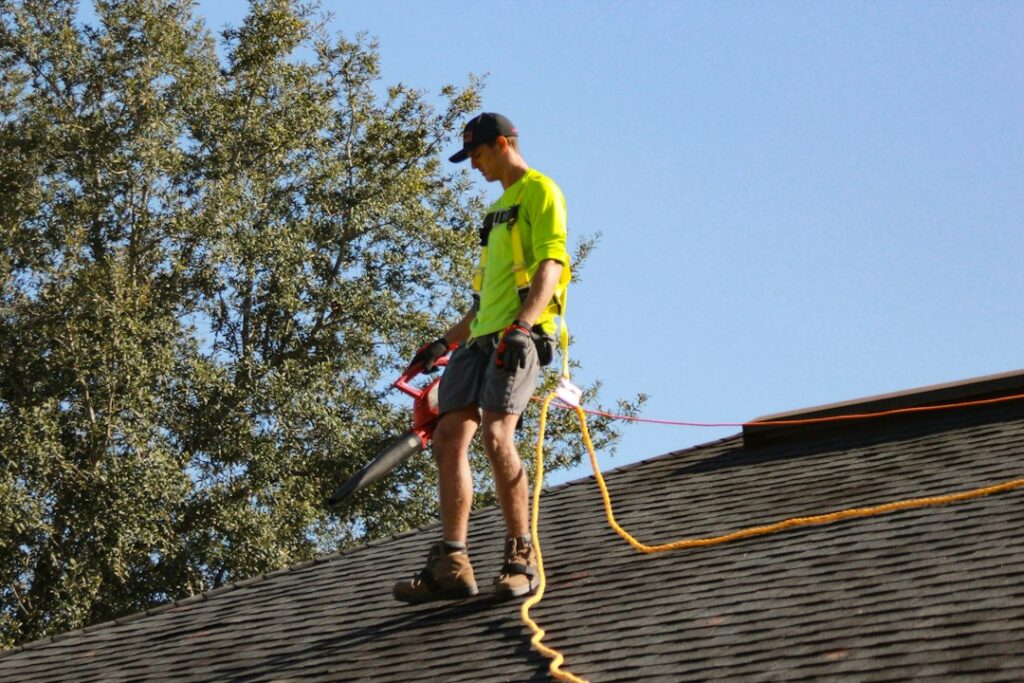
Roof maintenance is mostly a matter of observation, cleaning, and timely small repairs—not climbing onto the roof for every task. For households in Clay, NY, seasonal snow, ice, wind, rain, falling branches, and repeated freeze-thaw cycles make routine checks especially useful.
The safest approach is to inspect from the ground or attic whenever possible, keep drainage systems clear, and treat warning signs seriously before they become interior water damage.
What roof maintenance can a homeowner safely do?
Homeowners can usually handle ground-level inspections, gutter cleaning from a properly positioned ladder, attic observations, and minor debris removal. Walking on a sloped roof is more hazardous than it may appear, especially when shingles are wet, frosty, mossy, or weakened by age.
Begin with a visual inspection from the yard. Use binoculars if needed and look for:
- Missing, cracked, curled, or lifted shingles
- Dark patches or areas that appear to sag
- Exposed fasteners, loose flashing, or damaged vent covers
- Excessive granules collecting near downspouts
- Bent or detached gutters
- Tree limbs rubbing against the roof
- Moss or algae spreading across shaded roof sections
Do not rely on a single inspection. Damage can be hidden beneath snow, leaves, or roof debris, and some leaks do not appear inside until long after the original problem began.
How often should a roof be checked?
A practical schedule is to inspect the roof at least twice each year, ideally in spring and fall. Additional checks are worthwhile after strong wind, heavy rain, hail, or a major snow event.
A spring inspection can reveal damage caused by winter weather, including loose shingles, displaced flashing, clogged gutters, and ice-dam-related leaks. A fall inspection helps prepare drainage systems for leaves, freezing temperatures, and snow.
After severe weather, check the attic and upper ceilings as well as the exterior. Look for damp insulation, water stains, peeling paint, musty odors, or daylight visible around roof penetrations. A stain that feels dry may still indicate an active or recurring leak.
Why are gutters and downspouts so important?
Gutters and downspouts move roof water away from siding, windows, foundations, and entry points. When they are clogged or poorly draining, water can back up beneath roof edges and damage fascia, soffits, sheathing, and interior walls.
Clean gutters when leaves and debris begin to restrict flow, commonly in late fall and again after spring buildup. While cleaning, check whether:
- Water flows freely through each downspout
- Gutters slope gently toward their outlets
- Seams and end caps are leaking
- Hangers are loose or pulling away
- Downspouts discharge several feet away from the foundation
- Downspout extensions remain connected after winter
Avoid placing a ladder directly against a gutter. It can bend the gutter or slide unexpectedly. Use a stable ladder on firm, level ground, keep both hands available when possible, and stop if wind, ice, or wet conditions make the task unstable.
How can residents reduce ice-dam problems?
Ice dams form when heat escapes into a roof space, melts snow on warmer roof areas, and allows the water to refreeze near colder eaves. The resulting ice can block drainage and push water beneath shingles.
There is no reliable reason to treat large icicles as harmless winter decoration. They can indicate uneven roof temperatures, blocked drainage, or water collecting at the roof edge.
Useful preventive steps include:
- Keep gutters and downspouts clear before freezing weather
- Check that attic insulation has not shifted away from the edges
- Make sure soffit and ridge ventilation openings are not blocked
- Seal obvious air leaks around attic penetrations, chimneys, and light fixtures
- Remove leaves and debris that trap moisture near roof edges

If snow must be removed, use a roof rake from the ground and avoid scraping aggressively against shingles. Never climb onto an icy roof to shovel snow. Do not chip at an ice dam with a hammer, axe, or other sharp tool; that can damage shingles and waterproof layers while creating a fall hazard.
Persistent ice dams often point to an attic insulation or ventilation problem rather than a gutter problem alone.
Should moss and algae be removed from shingles?
Limited staining is usually cosmetic, but thick moss can hold moisture against shingles and lift their edges. Moss is most common on roof sections that stay shaded and damp, particularly beneath overhanging trees.
Remove leaves and small debris gently with a soft brush or a ground-based tool. Avoid pressure washing. High-pressure water can strip protective granules, loosen shingles, and force water beneath roofing materials.
Do not use improvised mixtures or harsh cleaning products without confirming that they are compatible with the roofing material. Some treatments can damage metal flashing, plants, siding, or nearby surfaces. Cutting back branches that keep a roof continuously shaded can help reduce recurring growth, but tree work may require separate safety precautions.
What should be checked after a storm?
After a strong storm, inspect the roof from the ground before approaching a ladder. Look for displaced shingles, fallen branches, damaged vents, bent flashing, and debris lodged in valleys or gutters.
Inside the home, check ceilings and attic spaces below roof penetrations, valleys, and areas near exterior walls. A leak may travel along rafters before becoming visible, so the stain may not be directly beneath the damaged spot.
Treat these signs as urgent safety concerns:
- A visibly sagging roof section
- Large areas of missing roofing
- Water entering near electrical fixtures
- A fallen tree or heavy branch resting on the roof
- Structural movement, cracking, or unusual ceiling bulging
- A chimney, vent, or flashing assembly that has pulled away
Keep clear of damaged areas until they can be assessed safely. Temporary interior steps, such as placing a container beneath a drip and moving belongings away from water, can reduce damage while avoiding roof access.
When is DIY roof work no longer appropriate?
DIY maintenance should stop when the task involves steep slopes, significant height, structural damage, electrical hazards, unstable ladders, or uncertain roof conditions. Roof work is not a good place to test balance or improvise fall protection.
A qualified roofing or building professional is appropriate when shingles must be replaced across a large area, flashing is failing, a leak cannot be traced, the roof deck feels soft, or storm damage affects the structure. Safety and building-code compliance matter more than completing a repair independently.
Keep a simple maintenance record with inspection dates, storm observations, photographs, and repairs. This makes it easier to identify recurring trouble spots and distinguish normal seasonal wear from a developing roof problem.
