
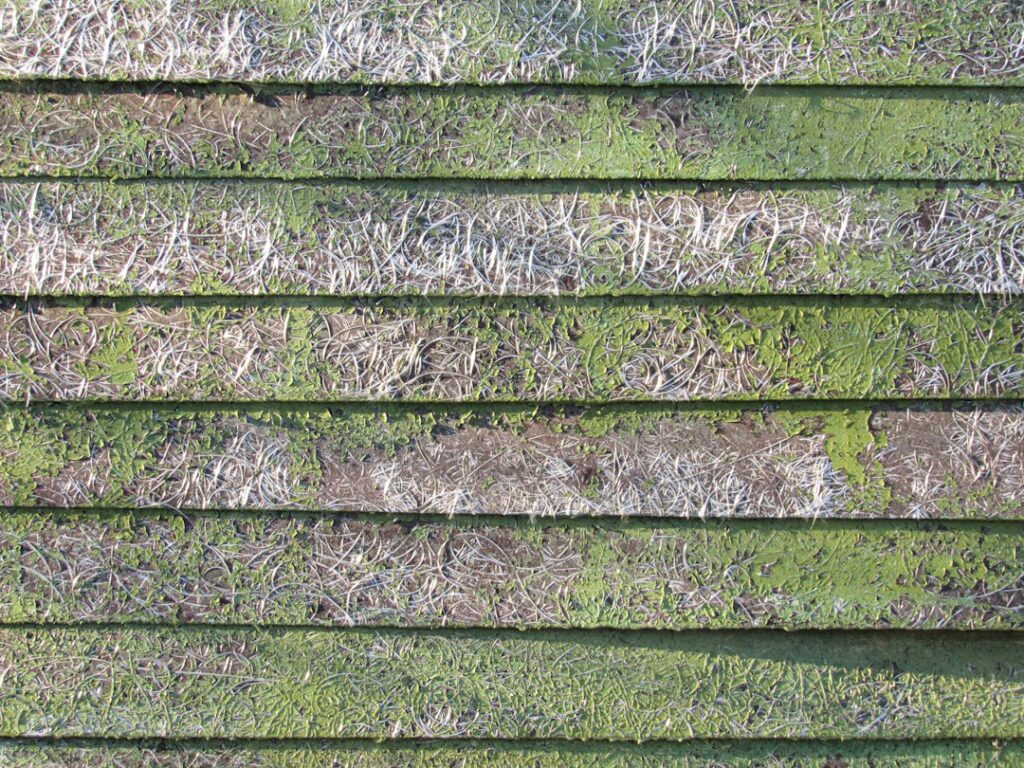
Roof discoloration can be caused by mold, mildew, algae, dirt, or normal aging, and each condition may require a different response. In Clay, NY, repeated rain, snow, shade, humidity, and leaf buildup can keep roofing materials damp long enough for organic growth to develop.
Knowing what to look for helps residents decide whether a roof needs simple maintenance, closer inspection, or prompt attention because moisture may be entering the roof system.
What does mold or mildew look like on a roof?
Mold and mildew usually appear as irregular dark, green, gray, brown, or black patches. They may be concentrated on shaded roof sections, beneath overhanging trees, near roof valleys, or around areas where leaves and debris collect.
Common visual signs include:
- Fuzzy, powdery, or blotchy growth on shingles
- Dark marks that become more noticeable after rain
- Greenish or gray patches in areas that dry slowly
- Streaks or spots spreading outward from damp areas
- Discoloration near flashing, vents, chimneys, or roof edges
- Organic debris that remains stuck to the roof surface
Mildew often appears as a thin surface coating. Mold may look thicker, more uneven, or more deeply established, although appearance alone cannot always identify the exact type of growth.
Is every dark streak on a shingle mold?
No. Dark roof streaks are frequently caused by algae rather than mold. Algae can create black, blue-gray, or greenish discoloration, especially on asphalt shingles. The streaks may run downward because rainwater carries moisture and microscopic material across the surface.
Mold is more likely when discoloration is associated with persistent dampness, decaying leaves, a musty odor, or visible growth on nearby wood and roofing components. However, these conditions can overlap. A dark mark does not automatically mean the roof has a serious mold problem.
Dirt, soot, pollen, rust from metal components, and normal weathering can also change the roof’s appearance. A useful clue is whether the mark has a soft, irregular, or spreading appearance instead of a consistent stain.
Where does roof mold usually develop?
Mold and mildew favor places that stay damp, shaded, and poorly ventilated. Typical locations include:
Shaded roof slopes
Roof sections facing away from direct sunlight may dry more slowly. Tree cover can increase shade while dropping leaves, needles, and small branches onto the shingles.
Roof valleys
Valleys collect water and debris from two roof slopes. If leaves or sediment remain in the channel, moisture may stay against the roofing material longer than intended.
Areas near roof penetrations
Flashing around vents, chimneys, skylights, and plumbing penetrations can develop moisture problems if seals deteriorate or debris prevents proper drainage.
Roof edges and gutters
Overflowing gutters can leave the lower portion of a roof repeatedly wet. Organic buildup along the eaves may also support mildew growth.
Low-slope sections
A section with limited drainage can remain damp after storms or snowmelt. Even a small area that dries slowly may develop discoloration before the rest of the roof.
How can someone distinguish roof mold from algae?
Algae commonly appears as flat streaks or broad discoloration that follows the flow of rainwater. Mold and mildew may look more patchy, raised, fuzzy, or concentrated around wet organic material.
The distinction is not always clear from the ground. A roof can also have algae and mold at the same time. For practical purposes, the more useful questions are:
- Is the area staying wet?
- Is debris collecting there?
- Are shingles lifting, cracking, or losing their surface coating?
- Is there staining or dampness inside the attic?
- Does the growth extend onto wood, insulation, or roof sheathing?
If the problem appears limited to surface discoloration, it may not indicate structural damage. If the roof has soft areas, exposed wood, sagging, damaged flashing, or interior water stains, the issue deserves closer evaluation.
Can mold on a roof cause problems inside the house?
Roof mold does not always enter the living space. It becomes more concerning when it is connected to a leak, trapped moisture, poor attic ventilation, or damaged roof decking.
Warning signs inside the home may include:
- Brown or yellow ceiling stains
- Damp attic insulation
- Musty odors in the attic
- Dark spotting on roof sheathing or rafters
- Peeling paint near upper walls or ceilings
- Dampness around vents, chimneys, or ceiling fixtures
- Frost or excessive condensation in the attic during cold weather
In Clay, NY, freeze-and-thaw cycles can worsen small openings around flashing and roofing joints. Snow and ice can also conceal drainage problems temporarily, making interior evidence especially useful when inspecting a roof during colder months.

Should roof mold be removed with a pressure washer?
Pressure washing is generally a poor choice for asphalt shingles. High-pressure water can remove protective granules, loosen shingles, force water beneath overlapping layers, and damage flashing or sealants.
Scrubbing aggressively with a stiff brush can create similar problems. Household bleach or other cleaning chemicals may also damage plants, siding, metal, or nearby surfaces if runoff is not controlled.
A safer approach is to identify the source of moisture first and avoid disturbing the roofing surface unnecessarily. If surface cleaning is considered, the method must match the roofing material and the manufacturer’s care requirements. Some roofs should not be walked on at all, particularly when wet, icy, steep, brittle, or damaged.
What conditions make roof mold more likely?
Mold and mildew usually reflect a moisture pattern rather than a single storm. Risk increases with:
- Heavy tree cover over the roof
- Leaves or needles trapped in valleys and gutters
- Limited sunlight
- Poor attic ventilation
- Roof leaks or damaged flashing
- Condensation from warm indoor air entering a cold attic
- Shingles that are aging, cracked, curled, or missing
- Gutters that overflow during rain
- Snow remaining on one roof section longer than others
Removing debris can help, but it will not correct a leak or ventilation problem. A clean roof can develop new growth if the underlying moisture condition remains.
When is roof mold a safety concern?
Inspection becomes unsafe when a roof is steep, wet, icy, fragile, or difficult to access. Walking near roof edges, skylights, valleys, and areas with hidden damage presents a fall risk. Moldy surfaces may also be slippery.
Professional evaluation is warranted when there are soft spots, sagging, active leaks, extensive growth, damaged structural wood, electrical fixtures near water, or visible mold in the attic. Safety concerns and possible building-code issues should not be handled casually.
Residents can often inspect safely from the ground using binoculars and can check accessible attic areas without stepping on roofing materials. Photographs taken from a safe location may help track whether discoloration is expanding.
How can mold and mildew be prevented?
Prevention focuses on keeping the roof and attic dry. Useful maintenance includes:
- Clearing leaves and branches from accessible roof drainage areas
- Keeping gutters and downspouts flowing freely
- Trimming vegetation that creates persistent shade or drops debris
- Checking the attic for damp insulation or condensation
- Watching for damaged flashing and missing shingles
- Keeping bathroom and kitchen exhaust fans vented outdoors
- Avoiding storage that blocks attic ventilation paths
- Inspecting after major wind, rain, snow, or ice events
Roof discoloration is not automatically an emergency, but it should not be dismissed when paired with dampness, deterioration, or interior staining. Identifying whether the problem is surface growth, drainage-related moisture, or a developing leak is the key to deciding what needs attention next.
