
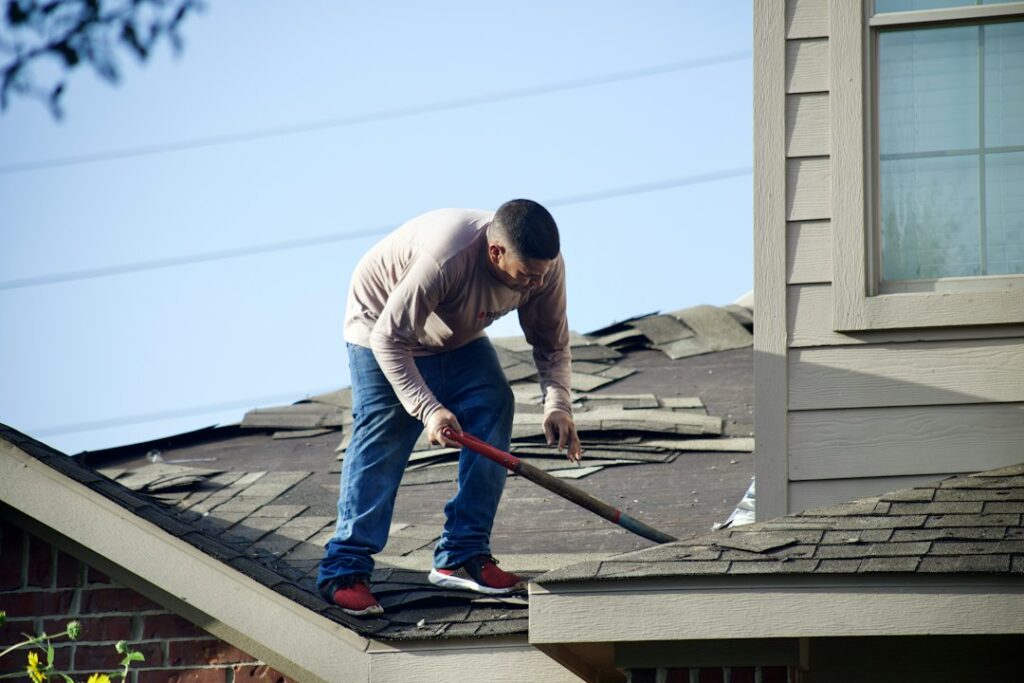
How long does a typical roof last?
A roof’s service life depends on its material, installation quality, ventilation, maintenance, weather exposure, and the condition of the underlying deck. Asphalt shingle roofs commonly last about 15 to 30 years, although some reach longer service lives when properly installed and maintained.
Age alone does not prove that replacement is necessary. A 20-year-old roof with intact shingles, sound flashing, and no history of leaks may still be performing adequately. However, an older roof deserves closer attention because deterioration often accelerates after repeated cycles of snow, freezing temperatures, thawing, wind, and summer heat.
In Clay, NY, winter conditions can place added stress on roofing materials. Snow accumulation, ice formation, wind-driven precipitation, and repeated freeze-thaw cycles can expose weak areas that may not be obvious from the ground.
What are the clearest signs that a roof needs replacement?
The strongest evidence is a pattern of widespread deterioration rather than one isolated defect. Replacement becomes more likely when several of these conditions appear together:
- Shingles are missing, cracked, curled, blistered, or badly worn across large sections.
- Granules are collecting in gutters or downspout outlets.
- The roof surface looks uneven, sagging, or wavy.
- Leaks have occurred in multiple areas or returned after repairs.
- Flashing around chimneys, skylights, vents, or wall intersections is failing.
- Moss or algae is accompanied by lifted, softened, or deteriorated shingles.
- Daylight is visible through the roof deck from the attic.
- The roof is near or beyond its expected service life and has a history of recurring problems.
A few missing shingles after a storm may be repairable. Widespread granule loss, brittle shingles, or repeated water entry usually indicates that the roof’s remaining service life is limited.
Does a roof leak always mean the entire roof must be replaced?
No. A single leak does not automatically require a full replacement. Water may enter through a damaged flashing detail, a small area of wind damage, a plumbing vent boot, or a localized opening around a roof penetration.
The visible stain inside the home may also be several feet away from the actual entry point. Water can travel along rafters, roof decking, insulation, or framing before appearing on a ceiling.
A repair is more reasonable when the damage is limited, the surrounding shingles remain flexible and secure, and the roof has substantial service life left. Replacement deserves consideration when leaks are recurring, repairs are needed in several locations, or the roofing material has become too brittle to work with safely.
What does the roof look like from the ground?
A ground-level inspection can reveal useful warning signs, but it cannot show every problem. Look for:
- Shingles with edges that curl upward or corners that no longer lie flat.
- Dark patches, exposed underlayment, or areas where shingles appear to be missing.
- A roofline that dips between structural supports.
- Excessive moss growth holding moisture against the roof surface.
- Metal flashing that is loose, rusted through, or visibly separated.
- Gutters filled with unusual amounts of asphalt granules.
- Damaged vents, ridge caps, or chimney coverings.
Binoculars can make this inspection easier without requiring anyone to climb onto the roof. Walking on shingles can cause damage, especially during cold weather when materials are less flexible.
Why is the attic important when evaluating roof condition?
The attic often reveals problems before they become obvious indoors. Check the underside of the roof deck for water stains, damp wood, mold-like growth, rusted fasteners, or areas where insulation is wet or compressed.

Also look for daylight entering through the roof deck, particularly around valleys, penetrations, and roof edges. A small amount of light around a properly vented opening may be expected, but light through the solid roof surface can indicate a gap or damaged decking.
Poor ventilation can shorten shingle life by allowing excessive heat and moisture to build up. In winter, warm attic air can contribute to uneven roof temperatures and ice formation along the eaves. Adequate insulation, air sealing, and balanced intake and exhaust ventilation are part of the overall roof system.
Can ice dams mean the roof needs replacement?
Ice dams do not automatically mean that the roofing material has reached the end of its life. They are often related to heat escaping into the attic, insufficient ventilation, snow conditions, or uneven roof temperatures.
However, recurring ice dams can cause damage over time. Meltwater may back up beneath shingles, wet insulation, stain ceilings, and deteriorate roof decking or fascia. If ice-related leaks continue despite improvements to attic insulation and ventilation, the roof’s edge details and underlayment may also need evaluation.
Removing ice from a roof with a shovel, hammer, or sharp tool can damage shingles and create additional leaks. Snow and ice removal can also be dangerous, particularly near roof edges and electrical service lines.
Is a roof replacement needed after a major storm?
Storm damage should be judged by the extent and type of damage, not simply by the severity of the weather. High winds may lift or remove shingles, while falling branches can puncture the roof deck. Hail can leave bruised areas that are difficult to see from the ground.
After a major storm, look for fallen roofing material around the property, new ceiling stains, exposed underlayment, damaged flashing, and dents or cracks in vents and other roof components. A roof with limited damage may be repairable, but widespread damage across multiple slopes can make replacement more practical.
Interior leaks should be addressed promptly. Buckets and temporary coverings may limit immediate damage, but they do not correct wet insulation, deteriorated decking, or hidden moisture.
Should a roof be replaced before selling or buying a home?
Not always. A roof does not need to be new to be acceptable in a real estate transaction. The more useful questions are its approximate age, remaining service life, maintenance history, documented repairs, and current condition.
A roof nearing the end of its expected life may influence inspections, insurance decisions, financing, or negotiations even if it is not actively leaking. Buyers and sellers should avoid relying only on the roof’s appearance. Documentation, attic observations, and a detailed evaluation provide a clearer picture.
When is replacement safer than continued repair?
Replacement is generally more appropriate when repairs are becoming frequent, the damaged areas are widespread, or the roofing material is too brittle to repair without disturbing adjacent shingles. It may also be necessary when the roof deck has significant rot, sagging, or moisture damage.
Safety takes priority whenever the roof is steep, icy, visibly unstable, or accessible only by unsafe climbing. Interior water near electrical fixtures, extensive mold-like growth, or a sagging ceiling requires prompt attention rather than a wait-and-see approach.
A sound decision considers the entire roofing system: shingles, underlayment, flashing, ventilation, gutters, roof edges, and decking. Replacing only the visible surface may not solve problems caused by hidden moisture or poor attic airflow.
What is the best time of year to replace a roof?
Roof work is usually easiest during dry, moderate weather, when shingles can seal properly and workers can move safely. Planning before winter can reduce the risk of snow-related leaks, but emergency repairs may be necessary at any time of year.
In a climate with substantial winter snow and freeze-thaw activity, inspecting the roof in spring can reveal damage that developed during the cold season. A second inspection in late summer or early fall can identify worn areas before winter weather returns.
The decision should be based on condition, safety, and the likelihood of further damage—not on age alone. A roof that is leaking repeatedly, deteriorating across broad areas, or showing structural warning signs has likely moved beyond routine maintenance and into replacement territory.
